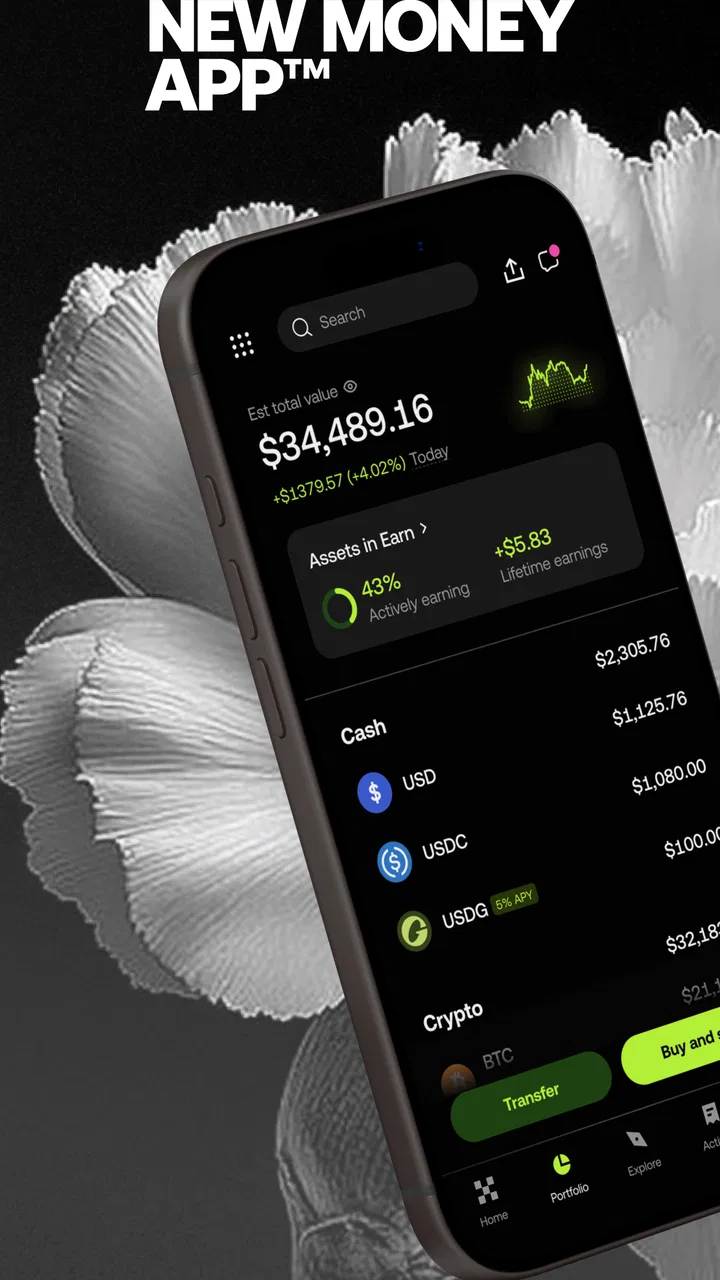
OKX: Buy Bitcoin BTC & Crypto
- 4.1
- Rating
- 10.00M
- Installs
- Free
- Price

 Analysis by App-foxy
I approached OKX as someone who wanted to move from “I should probably understand crypto” to completing a practical transaction without constantly switching between unrelated tools. It is a finance app from OKX INC. for buying, selling, and trading digital assets, with a Web3 wallet included in the same general experience. That combination makes it more ambitious than a simple price-watching app, but it also means there is more to learn before the first transfer feels comfortable.
My overall impression is that it works best as a central workspace for someone who wants exchange activity and wallet access close together. It is free to install, rated for Everyone, and available on devices running Android 7.1 or later. The current version is 6.172.1, and the app has reached more than ten million installs, with an average rating of 4.2 from roughly 923,000 ratings. Those figures suggest a mature product with a large user base, although popularity should not be confused with suitability for every investor.
From a vague crypto goal to a completed transaction
I use this section to show how a broad crypto intention can become a careful, manageable sequence rather than a rushed tap through the app. The useful shift is to define the destination before choosing an asset or action: once I know whether I’m buying to hold, trade, or transfer, I can judge each confirmation screen by what that goal requires.
You May Also Like

 Pandora - Music & Podcasts
Pandora’s Music Is Easy to Start, but Harder to Recover
Pandora’s strength is its low-effort path from a seed to a station. Its weak spot is how much confidence it asks you to place in connection, setup, and quiet recovery.

 8 Ball Pool
 Is Built on Rivalries, Rematches, and Routine
A close look at the rivalries, rematches, shared routines, and unanswered safety questions that turn a quick pool match into a persistent mobile community.

 Samsung Music
’s Quiet Strength Is Playing What You Already Own
Its reach comes less from spectacle than from dependable access to a personal library. That simplicity is both the app’s strongest retention engine and its ceiling.

 AccuWeather: Weather Radar
AccuWeather Review: A Quick, Clear Forecast for Everyday Decisions
For everyday plans, the best forecast is the one you can understand quickly. AccuWeather makes rain timing, radar, and local conditions easy to act on, with a few trade-offs.

 Hill Climb Racing
Why Hill Climb Racing Still Turns Crashes Into One More Run
A tiny car, a bumpy hill and one more upgrade: Hill Climb Racing keeps resurfacing because its simple chaos makes every near-miss feel personal.

 AliExpress - Shopping App
AliExpress Makes Global Shopping Feel Personal, but Shoppers Bear the Risk
AliExpress turns a global marketplace into a pocket-sized discovery engine. Its reach is useful, its shopping loop compelling, and its trade-offs easy to miss.
More From Our News Desk
View All News


Starting with the right expectation
The most useful way to judge this app is to follow a realistic workflow. Imagine I have money in a regular account, I want to buy a small amount of Bitcoin, and I may later move it to a wallet or use a Web3 service. I am not looking for a game-like experience or a passive investment recommendation. I need to understand what I am doing, check the destination carefully, and accept that crypto transactions can involve irreversible mistakes.
OKX gives me a single place to begin that process. The home screen is designed around market activity and account actions rather than long educational articles. That is convenient when I already know the asset and action I want, but it can feel dense when I am still learning the difference between an exchange balance, a wallet balance, and an on-chain transaction. I would not treat the app as a substitute for learning those basics.
The first practical decision is whether I want to trade inside the platform or use the wallet side of the experience. Those paths may eventually connect, but they represent different responsibilities. An exchange workflow is about placing an order through a service. A wallet workflow is about controlling or using assets in a blockchain environment. Keeping that distinction clear prevents one of the most common beginner errors: assuming that every crypto balance is handled in exactly the same way.
Moving through the purchase flow
For a straightforward Bitcoin purchase, I would start by selecting the buy action, choosing Bitcoin, and checking the available payment route before entering an amount. The important habit is to pause at the review screen. I look at the asset, the amount I am spending, the expected amount received, and any displayed charges or conversion details. A fast tap-through approach is risky here because the final result can differ from the number I had in mind.
This is one of OKX’s stronger qualities: it brings several stages of the process into one app instead of forcing me to find a separate exchange, wallet, and Web3 browser immediately. That reduces app switching and makes the overall journey easier to follow. The trade-off is that the interface exposes more concepts than a basic brokerage-style app. A newcomer may see market tools, wallet terminology, and transfer options before knowing which ones matter.
I would also decide in advance whether the purchase is meant for holding, trading, or sending elsewhere. That sounds obvious, but it changes what I check next. Someone holding Bitcoin on the exchange may care mostly about account security and portfolio visibility. Someone sending it to another wallet must care about the receiving address and the correct network. Someone trading needs to understand order types and price movement rather than simply pressing the largest button on the screen.
For a first transaction, I prefer a small test amount. This is not because the app makes a transfer unsafe by itself; it is because crypto addresses and networks are unforgiving. A test helps me confirm that the destination, asset, and network choices are correct before I commit a larger amount. That workflow is more valuable than any attractive chart because it protects against a human mistake at the handoff point.
Understanding the exchange-to-wallet handoff
The most important handoff in OKX is the movement from an exchange-held balance toward the Web3 wallet or an external destination. I would not assume that selecting an asset automatically selects the right network. The same asset can appear across different blockchain networks, and a mismatch between the sending route and receiving route can create serious problems.
Before confirming, I check the full address rather than relying only on a shortened preview. I also compare the network name on both sides and make sure the receiving wallet is prepared for that asset. If I am using the built-in wallet, I still treat the process with the same care I would use for any self-custody tool. Having the wallet inside the same app makes the handoff more convenient, but convenience should not turn into casual confirmation.
This is where OKX differs from a simple exchange application. A basic alternative may keep the user inside a narrower buying and selling loop, which can be easier for someone who never intends to interact with decentralized services. OKX is more useful when I want a bridge between exchange activity and Web3 use, but the added flexibility brings more places to make a wrong selection.
My practical rule is to separate the steps: buy first, verify the balance, prepare the destination, then transfer. I would avoid trying to purchase and send immediately while distracted. I would also save no address merely because it has worked once; I would still verify the network and destination whenever the circumstances change. This deliberate pause is an important part of using the app well.
Using the wallet side without losing track of custody
The wallet element is appealing because it keeps Web3 access near the exchange tools. That can be useful for someone who wants to explore decentralized applications, manage supported assets, or move funds without maintaining several unrelated apps. In my experience, the benefit is less about having one icon on the phone and more about reducing the number of handoffs between services.
At the same time, a wallet is not just another portfolio tab. I would think carefully about which account controls the funds, how recovery information is protected, and whether I understand the action being signed. The app can make the route available, but it cannot make a complex blockchain interaction harmless. If a decentralized application asks for approval, I want to know what asset and permission are involved before accepting.
This is an area where a specialist wallet may be preferable for an experienced user who wants a very focused interface or a particular ecosystem. OKX is more attractive to someone who values a combined exchange and Web3 setup. The choice depends on whether convenience across functions matters more than having a narrowly tailored tool.
What the result looks like in everyday use
Consider a realistic evening scenario. I have decided to allocate a modest amount to Bitcoin, I open the app, review the current purchase route, and complete the order. Later, I want to move the asset to a personal wallet. Instead of opening a second exchange and copying information between several screens, I can continue from the same account area, prepare the withdrawal or wallet transfer, and check the destination before confirming.
The result is not simply “I bought crypto.” The useful outcome is a traceable sequence: money entered the platform, an asset appeared in the relevant balance, and I made a separate decision about where that asset should remain. OKX supports that kind of workflow better than an app that stops after the purchase. It gives me room to continue, but it does not remove the need for careful record-keeping.
I would keep my own notes for larger transactions, including the asset, destination, network, and purpose. This is especially helpful when the app presents several balances or when I use both trading and wallet functions. A screenshot alone is not a complete record, but a simple personal log can make later checking much easier.
Where the flow becomes difficult
The first point of friction is information density. OKX is not built only for a person who wants one occasional Bitcoin purchase. Trading screens, market movements, wallet functions, and Web3 possibilities can compete for attention. I found that the app makes more sense after deciding on one task at a time. Browsing every section before completing a basic goal can create confusion rather than confidence.
The second difficulty is that crypto terminology carries real consequences. Words connected with networks, transfers, orders, and wallet actions are not decorative labels. A beginner who expects a familiar banking-style transfer may underestimate how much responsibility sits with the sender. OKX can organize the process, but the user still has to interpret it correctly.
The third issue is emotional rather than technical. Market charts encourage frequent checking, and the presence of trading tools can make a long-term plan feel like an invitation to react to every movement. I would not use the app as a reason to trade more often. If my goal is simply regular exposure to Bitcoin, a written schedule and a limited number of app visits may be healthier than constantly monitoring price changes.
There is also a meaningful distinction between using OKX for a small, occasional purchase and using it as the main place for serious activity. The more money or complexity involved, the more important it becomes to understand account protection, transfer verification, tax records, and personal custody choices. The app can be part of that system, but it is not the entire system.
Who will get the most from it
I would recommend OKX to users who want more than a basic buy-and-hold screen. It suits someone who expects to compare assets, manage a broader crypto workflow, or explore the connection between exchange services and Web3 tools. The free entry point also makes it easy to inspect the interface before deciding whether the broader feature set matches personal needs.
It is particularly useful for an intermediate user who already understands the difference between buying an asset and transferring it on a blockchain. That person can benefit from having exchange and wallet functions nearby without needing to rebuild the workflow across separate applications. The large installed base and substantial review activity also indicate that the app is not a niche experiment.
I would be more cautious about recommending it to a complete beginner who wants a quiet, highly simplified investing experience. A simpler alternative may be better if the only goal is occasional exposure to one asset and the user has no interest in Web3. Likewise, someone who wants direct human guidance, traditional investment products, or a familiar bank-like environment may find a dedicated financial service more comfortable.
How it compares with narrower alternatives
Compared with a basic crypto buying app, OKX offers a wider path from purchase to trading and wallet use. That breadth is its main advantage, but it is also the source of much of the learning curve. A stripped-down competitor may feel clearer on day one, while OKX may become more valuable once I need additional control over what happens after the purchase.
Compared with a standalone self-custody wallet, OKX is more convenient for someone who wants exchange access nearby. A specialist wallet can feel more focused for on-chain activity, while OKX makes more sense when the starting point is buying or trading through a broader financial app. Neither approach eliminates the need to protect recovery details and verify transactions.
Compared with a traditional investment app, OKX is aimed at a different kind of responsibility. Crypto transfers and Web3 interactions require more attention to addresses, networks, and custody. I would choose it because I specifically want those capabilities, not because I expect it to behave exactly like a conventional savings or brokerage application.
Small habits that improve the experience
My first habit would be to use the app in task mode. I open it with one purpose—buy, review, trade, or transfer—and avoid wandering through every market screen. This reduces impulsive decisions and makes it easier to notice whether I am looking at an exchange balance or a wallet balance.
My second habit would be to treat every transfer as a separate verification exercise. I check the asset, network, address, and amount before confirming, even when the destination is familiar. For a new destination, I use a small test first. This is a simple workflow improvement, but it matters more than learning every advanced chart option.
My third habit would be to keep the app updated and protect access outside the transaction itself. The current release is 6.172.1, and I would use the latest available version offered for my device rather than relying indefinitely on an old installation. I would also avoid storing sensitive recovery information in an exposed note or sharing it with anyone claiming to provide support.
Finally, I would decide what success means before opening the app. If success means building a long-term position, I need discipline. If it means moving assets to a wallet, I need transfer accuracy. If it means active trading, I need a defined risk limit. OKX can support all three directions, but the app cannot choose the right one for me.
My final view after following the whole journey
OKX is a capable finance app for people who want a connected route through buying, selling, trading, and Web3 wallet activity. I like that it can cover the journey from an initial purchase to a later transfer without forcing me to assemble the entire process from separate products. Its strongest quality is this continuity between stages.
My reservation is that continuity comes with responsibility. The app feels less suitable when I want only the simplest possible crypto experience, and its broader interface can overwhelm someone who has not learned basic blockchain vocabulary. The presence of wallet and Web3 tools should be viewed as a reason to pay closer attention, not as proof that every action is beginner-proof.
With those limits in mind, I would recommend it to an informed user who wants room to grow beyond occasional purchases. I would start small, verify every handoff, keep exchange and self-custody decisions separate, and avoid letting market screens dictate my behavior. For that kind of user, OKX is a practical all-in-one starting point; for someone seeking a minimal, traditional investment interface, a narrower alternative is likely the better fit.
FAQs for OKX: Buy Bitcoin BTC & Crypto
01What is OKX and what can I do with it?
OKX is a comprehensive cryptocurrency trading app that allows users to buy, sell, and trade a wide range of cryptocurrencies, including Bitcoin (BTC), Ethereum (ETH), and many altcoins. The app offers advanced trading features, market analysis tools, and a secure wallet to manage your crypto assets effectively.
02Is OKX safe to use for cryptocurrency transactions?
Yes, OKX employs industry-standard security measures to protect users' funds and personal information. It uses encryption, two-factor authentication (2FA), and cold storage for assets. However, users should also take personal precautions, such as enabling 2FA and securing their account credentials.
03Are there any fees associated with trading on OKX?
OKX charges trading fees based on the user's trading volume over a 30-day period. The fees are tiered, with lower fees for higher trading volumes. Additionally, fees vary depending on whether you are a maker or taker in the transaction. Always check the latest fee structure on the app or website for detailed information.
04Can I use OKX if I am new to cryptocurrency trading?
Yes, OKX is suitable for both beginners and experienced traders. The app features a user-friendly interface with educational resources and tutorials to help newcomers understand crypto trading. Advanced traders can access more sophisticated tools and charts to enhance their trading strategies.
05What cryptocurrencies are available on OKX for trading?
OKX supports a wide range of cryptocurrencies, including major coins like Bitcoin (BTC), Ethereum (ETH), and Litecoin (LTC), as well as numerous altcoins and tokens. The platform frequently updates its listings to include new and promising cryptocurrencies, providing users with diverse trading options.
Pros
- User-friendly interface for beginners.
- Wide range of cryptocurrencies available.
- Robust security features for safe trading.
- Low transaction fees compared to competitors.
- Comprehensive educational resources provided.
Cons
- Lacks 24/7 customer support options.
- Complex verification process for withdrawals.
- Limited fiat currency support.
- Occasional app performance lags.
- Some features require advanced knowledge.

OKX: Buy Bitcoin BTC & Crypto
Gallery